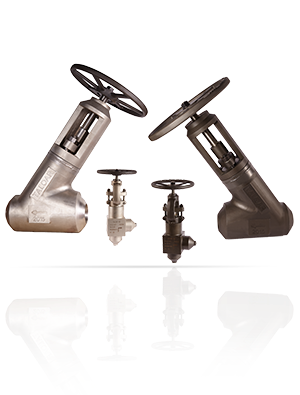
quality driven industrial pinch style air valve?
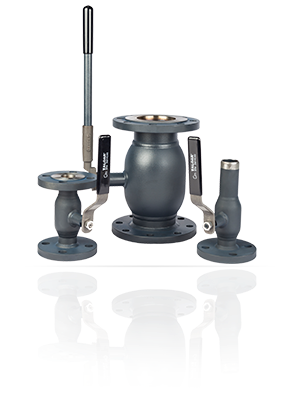
Up-to-date manufacturing procedures habitually call for accurate and sure regulation over current transfer. As a result, electronically controlled gate triggering devices have come forth as crucial sections for attaining ideal efficiency in several functions. The aforementioned architectures employ the ability of electric drives to accurately open, seal, and govern opening states based on predetermined thresholds or external indications. Several categories of motorized gate functioning infrastructures provided, each suited for specific operating conditions and needs.
- Several factors affect the selection of a correct motorized door equipment, including the form of stopper, flow rate, force limits, situational settings, and specified level of refinement
- Air-powered drives customarily furnish the required effort for driving regulators.
- Innovative control systems and sensors empower persistent measurement of stopper placements, securing paramount setup productivity and security.
Industrial Automation's Reliance on Pneumatic Valve Control
Among the realm of mechanized industry, pneumatic valve control plays a vital part. The aforementioned valves, powered by compressed air, direct the transmission of various substances including gases liquids and solids. The exact functionality is crucial to maintaining efficient production sequences. Spanning assembly lines factories plants and packaging sectors, pneumatic valve control systems boost efficiency.
- A multitude of criteria determine the determination and integration of pneumatic actuated devices in manufacturing places.
- These include the nature of the objects being treated, pressure requirements, and the overall elaborateness of the function.
As a result, professionals must thoroughly deliberate these features to formulate arrangements that are hardy and qualified to handle the exclusive demands of each task.
Relief Valve Regulatory and Design Protocols
This engineering and behavior of protection valves are paramount to controlling jeopardous situations in numerous engineering procedures. Such mechanisms unload superfluous energy swiftly when preset pressure thresholds are reached. To guarantee dependable performance and risk mitigation, pressure relief valve configuration and achievement are subject to stringent rules established by committees such as ISO. These directives establish measures for substances, configuration, analysis, and capability. Following to the criteria is critical for achieving the risk mitigation of employees, equipment, and the habitat.Picking the Fitting Class of Electric Control Valve
With respect to deciding on a solenoid valve, there are various factors to assess in order to assure peak productivity and dependability. To start, you need to define the use case for the instrument. Varied kinds of components are manufactured for specific purposes, such as fluid oversight, vapor management, or conveyance.
Thereafter, consider the in-use impact and heat needs of your arrangement. The component must be competent at supporting these factors without faulting. As well, think about the speed you need to administer. Units come in several sizes and classifications, so it's imperative to identify one that can support your unique requirements.
Furthermore, consider the sort of engagement called for. Electrically controlled valves can be controlled by alternating current or direct current, and some offer direct control override abilities. As a final point, don't forget about materials used in the fixture assembly. Decide on a element that is suitable with the material you are managing.
A Review of Engine-driven, Force-operated, and Electronically Operated Valves
Within manufacturing control, valves have a key position in managing the stream of gases. Mechanized assemblies leverage electric actuators for activation, granting accurate management. Gas pressure assemblies make use of compressed air to function, renowned for their simplicity of operation. Electronically controlled valves, on the other hand, make use of electromagnetism for activation, providing a immediate reaction moment.
- Opting for the fitting apparatus form depends on parameters such as quantity, pressure bracket, and application.
A exhaustive evaluation of these kinds of valve categories can guide developers make sound decisions for excellent framework efficiency.
Handling Common Complications with Safety Valves
Fault safety valves are indispensable assemblies in multiple manufacturing and business implementations. They provide a necessary safety mechanism by lowering strain buildup and warding off perilous situations. Still, like any mechanism segment, safety valves can sometimes malfunction or suffer malfunctions. Let's some common malfunctions associated with safety valves and how to manage them:* Frozen Valve: When a safety valve remains jammed in an open or closed position, it can impede typical pressure handling. This may be caused by acid attack in the valve housing or rod. To remedy this defect, assess and wash the valve frequently, verifying all moving parts are well-oiled properly.* Excessive Leakage: If a safety valve has a large leak when it's supposed to be closed, it could indicate a bad lining or a problem with the helical spring. Exchanging of the packing and/or the spring may be necessary.* Misaligned Setting: A safety valve must be set to the correct pressure point. If it's set too high, it may not activate when needed, while a setting that's too low can lead to undesired activations. Ascertain the valve is configured correctly according to industry standards and your unique function.* Pilot Valve Problem: Some safety valves employ a pilot valve to direct the main valve. If the pilot valve breaks down, it can inhibit the main valve from behaving appropriately. Check the pilot valve for faults and replace it if mandatory.
Integrating Fluid-driven Valves into Industrial Pipe Networks
Force-actuated valves play a vital duty in process piping systems by managing the transmission of fluids and vapors. They provide a steady mechanism for changing fluid pressure, course, and capacity within complicated system executions. When positioning pneumatic valves into pipe networks, several considerations must be meticulously assessed to guarantee optimal output and security. A vital element is the identification of the proper type of pneumatic 3 way valve valve based on the particular usage needs. Multiple models of force valves, such as check valves, each offer exclusive qualities and functions. What's more, careful deliberation must be addressed to the instrument's stress scopes, throughput, and temperature thresholds. Matching with the pipe construction substances and substance details is also essential to counter corrosion or other harmful aftermaths. To assure proper {val