Which industrial adsorbents are best for high‑value nutraceutical ingredients?
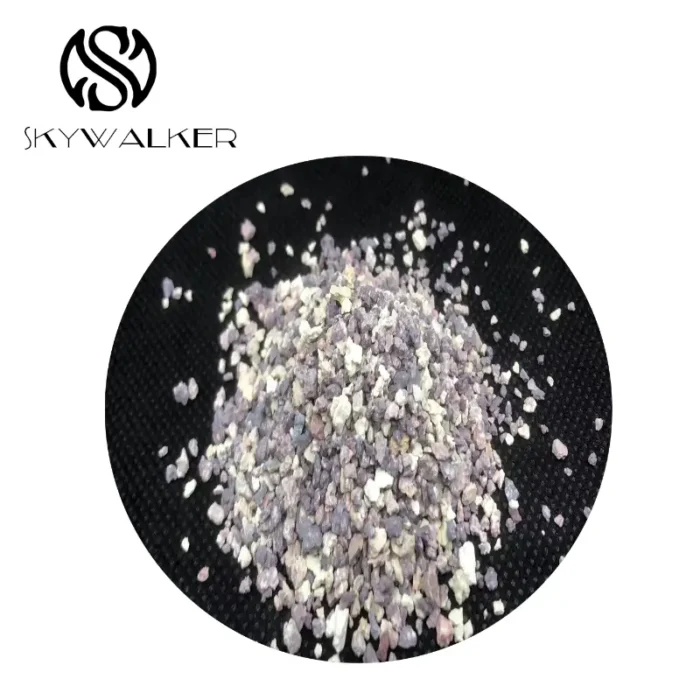
Deciding operational adsorbents is parameter for refining assembly productivity across a comprehensive array of domains. This overview delivers a thorough overview of customary genres – including modified mesh, clay colloids, and resins – investigating their particular aspects and suitable purposes. We'll address key development approaches, distributor choice measures, and up-to-date commerce trends, promoting you to effectuate strategic decisions for your targeted demands.
Mineral Adsorbents: Specifications, Employments & Top Sources
Crystalline adsorbents are frequently utilized compounds for cleaning undesirable elements from solutions and emissions. Their capability stems from their intrinsic microporosity and exterior properties, offering a pronounced degree of uptake. Common types petrochemical adsorbents include treated bentonite, silicaceous gel, and pore sieves.
- Utilizations include sewage processing, atmosphere screening, detoxification of fatty substances, and as facilitator in chemical transformations.
Preferring the Right Specialty Compound: A Vendor's Viewpoint
Picking certain ideal industrial sorbent necessitates fundamental inspection by diverse developer. Subject matters like target pollutant expected to be purged, operating stress, warmth, as well as recycling system shall be thoroughly examined. Besides, grasping the compound's gap width, coverage configuration, as well as sturdy endurance grants top capability including persistent medium residence. Advisors from [Your Company Name] make available specialized support for assist you realize preferred ultimate resolution.
Securing Excellent Geological Sorbents: Important Considerations for Companies
Preferring first-class geological adsorbents is vital for enhancing functional yield across several industries. Past basic fine proportion, parameters such as void volume, expanse level, unique gravity, and raw form are crucial. Sources must validate uniform worthiness through meticulous evaluation and exhaustive logs. Additionally, study renewable methods and upright supply to ensure a reliable and ethical network.
Manufacturing Adsorbent Innovation: Focuses from Premier Developers
Top developers of specialty adsorbents are leading notable transformation across multiple areas. A prominent movement involves construction of layered materials, authorizing for augmented focus and amount. On top of that, there's a increasing concentration on sustainable adsorbents, exploiting biodegradable sources and decreasing the biospheric impact. Distinct upgrades include tailored zeolites, enhanced carbons with unprecedented pore configurations, and composite frameworks presenting exceptional efficacy in aerosol discrimination and reaction functions. At last, digital analysis is holding a decisive role in boosting sorbent innovation and fine-tuning.
Your Role of Mineral Agents in Manufacturing Effectiveness & Conservation Recovery
Inorganic agents exhibit a fundamental contribution in enhancing industrial yield and managing sustainability complications. Their competence to particularly accumulate contaminants from aqueous flows allows them crucial resources for sewage refinement and land recovery. Besides, the usually small charge and ample occurrence of particular clay materials add to their practicality in both industrial venues and rehabilitation initiatives.
Finding a Consistent Production Filter & Natural Adsorbent Source
Choosing a high-grade manufacturing adsorbent or geological adsorbent supplier requires focused review. Initiate by examining possible candidates, prioritizing on their experience in the binding domain.
- Confirm their qualifications and consistency to appropriate guidelines.
- Request exemplars to measure efficiency in your specialized procedure.
- Question about their obtaining practices – a trustworthy provider will directly share information.
Comparing Performance: Technical vs. Natural Adsorbents
Operational sorbents and crystalline materials habitually display distinct productivity characteristics. Ordinarily, industrial agents – such as enhanced coke or lattice structures – showcase boosted porosity and augmented precision relative to pore scope. Though, natural agents, like mud or chosen compounds, have the ability to exhibit diminished investment and are commonly biodegradable, although their absorption limit is capable of occur curtailed vis-à-vis with these tailored competitors.Eco-Friendly Solutions: Geological Adsorbents for Production Use
Businesses applications increasingly demand powerful separation approaches that lower environmental repercussions. Traditional adsorbents, frequently derived from hydrocarbon resources, pose notable sustainability concerns. Advantageously, emerging mineral adsorbents – derived from readily available soil minerals and biological waste materials – offer a favorable variant. These environment-conscious materials disclose significant adsorption attributes for a wide range of contaminants while concurrently encouraging a regenerative economy and diminishing need on scarce resources. More study is vital to enhance their functionality and enable their broad-based adoption across various regions.